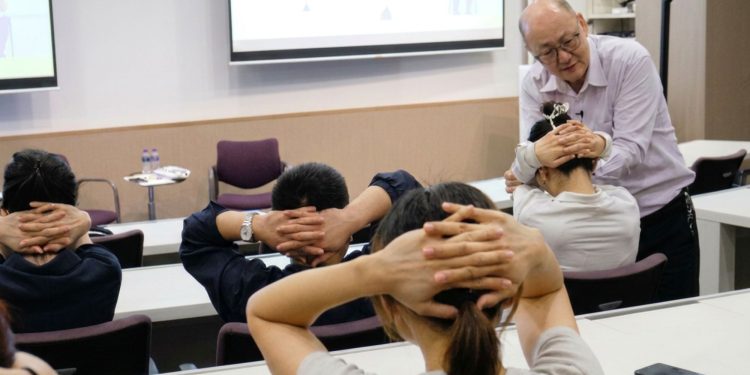
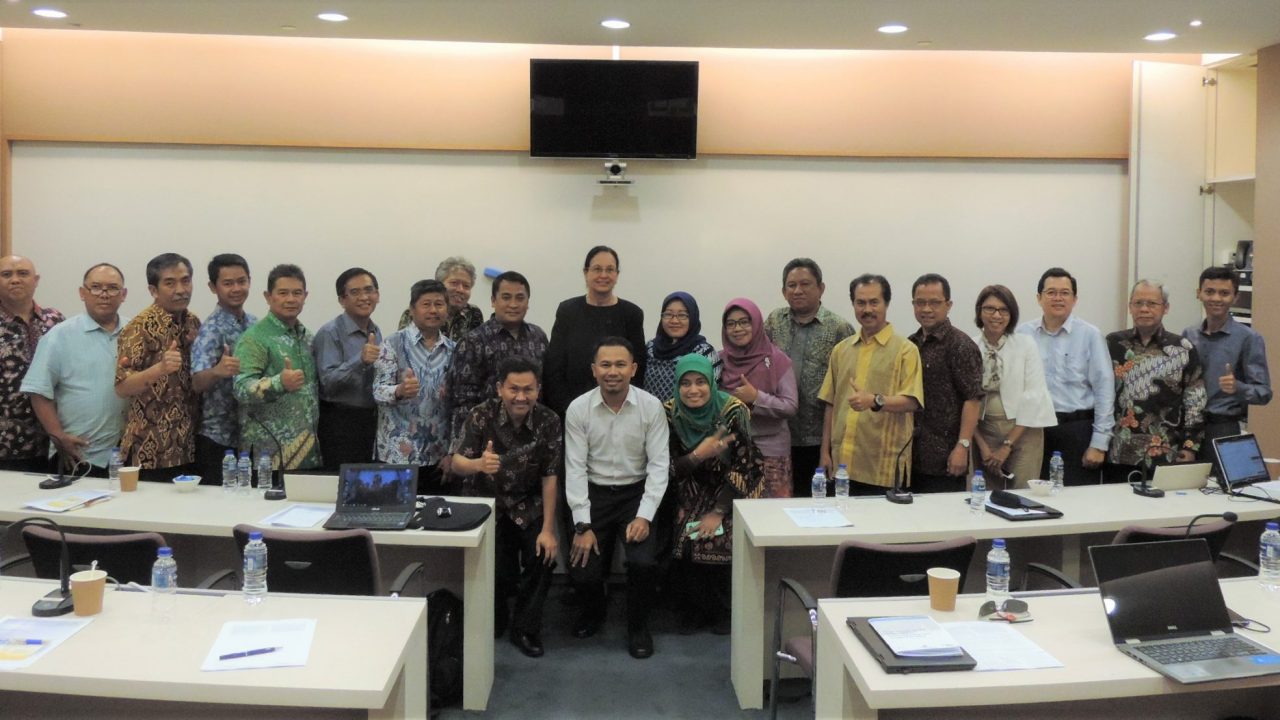
The HEAD Foundation, in partnership with the World Bank, the Directorate General of Learning and Student Affairs (DGLSA) Indonesia, and the Department of Foreign Affairs and Trade (DFAT), Australia, brought together participants from 11 Indonesian Teacher Training Institutions (Lembaga Pendidikan Tenaga Kependidik – LPTK) for a five-day Professional Learning Programme in Singapore from 15 to 19 October 2018.
The Professional Learning Programme provided a platform for leaders of the LPTKs to form collaborative partnerships as they rethought and reimagined the current Professional Teacher Training Programme (Pendidikan Profesi Guru – PPG). The main outcome of the programme was to formulate three different practical enhancements to the current PPG model developed by the participants who were grouped by region: Central, Eastern, and Western Indonesia.
On the first day of the programme, Professor Gopinathan, Academic Advisor to The HEAD Foundation, shared how Singapore built a high-performing education system, and specifically how teacher education remains a vital element in this endeavour. Professor Muchlas Samani, Professor of Education at the State University of Surabaya (UNESA), shared more about the issues and challenges Indonesia’s education system, especially the LPTKs, face while implementing education reform. Later in the day, participants presented the challenges and problems of the current PPG model and the curriculum that mathematics and science pre-service teachers undergo during their training.
During the second day, Professor Berinderjeet Kaur, Professor of Mathematics Education, National Institute of Education (NIE), Singapore, introduced the different methods and tools that NIE uses to develop the abilities of mathematics teachers in Singapore, both for pre-service and in-service courses. Dr Teo Tang Wee, Associate Professor in the Natural Sciences and Science Education (Academic Group) at NIE, explained how science teachers were prepared to nurture students as an inquirer of science. She also shared about the different programmes that the Ministry of Education introduced over the years to “give students the opportunity to acquire skills and qualities based on practical application of knowledge in real-world contexts”. One such programme, Applied Learning Programme (ALP) emphasizes the relevance of what is learnt in the classroom by providing experiential learning for student to enact authentic scenarios.
A panel discussion on the importance of a healthy partnership between the government, the teacher training institutes, and the schools, was held on the third day of the PLP. Mrs Margaret Tan, Principal of CHIJ Primary (Toa Payoh); Mrs Belinda Charles, former Dean of the Academy of Principals (Singapore); and Dr Jessie Png, Senior Lecturer at NIE, shared their perspectives on this partnership. Participants also visited NIE where the Associate Dean (Practicum), Dr Lim Seok Lai, and Associate Dean (Postgraduate Diploma in Education), Assoc Prof Eddy Chong, each shared more about Singapore’s practicum and PGDE structure. Participants also visited the Internet of Things (IoT) space at NIE where Dr Samson Tan, Head of IN-Learning, presented IoT as a makerspace for creation, invention and learning.
Participants visited Fajar Secondary School to understand more about the Science ALP programme from Mr Terence, Head of Department, Science. Ms Lee Min Rong, Subject Head of Chemistry, and Ms Shirley Yong, Subject Head of Physics and LSS also shared about the lower secondary science curriculum in the school. The participants interacted with students during two ALP sessions to gain insights from the student’s perspective on the ALP.
On the last day of the PLP, participants presented three ideas on how to improve the existing PPG model, using insights gleaned from the five days of interacting with experts in Singapore’s education sector. Professor Gopinathan and Professor Muchlas Samani provided their feedback, both reminding participants of the intense level of commitment each of them should have in seeing their plan through. The PLP was brought to a close with a certificate presentation ceremony.
The Foundation is also building the capacities of Indonesian educators through the following programmes: