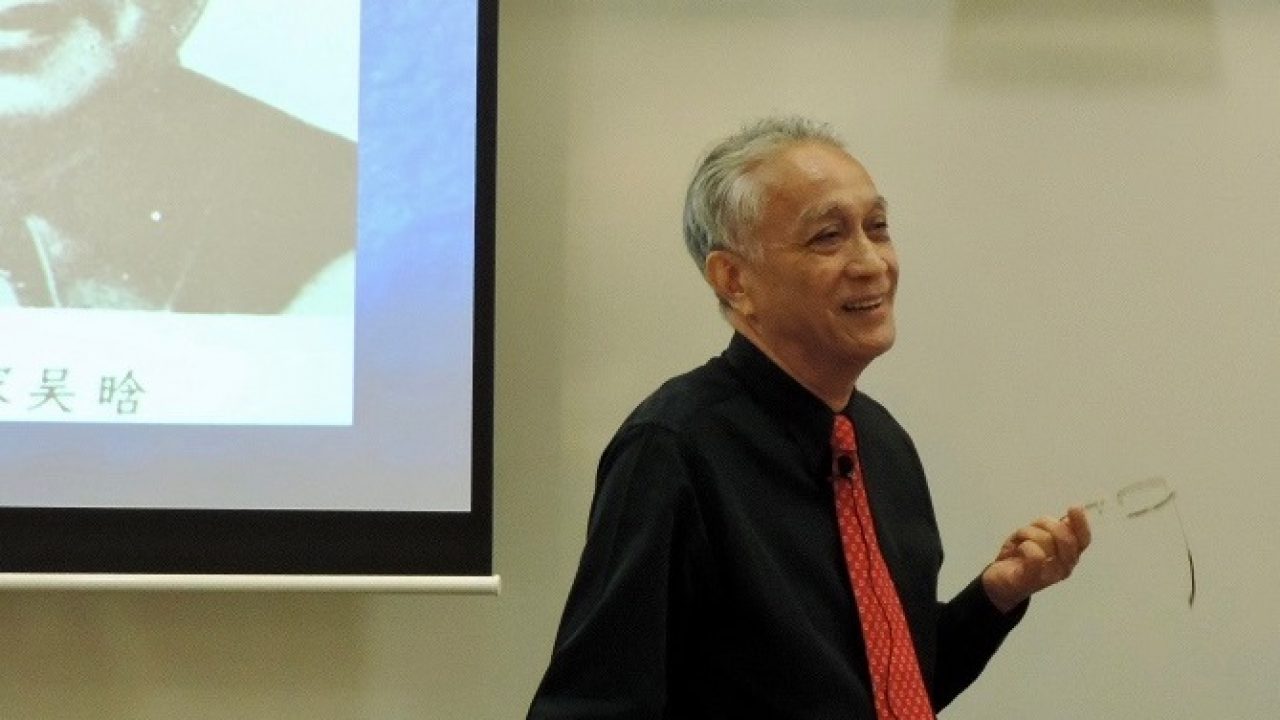
The controversial figure of Mao Zedong and his political campaign, the Great Proletarian Cultural Revolution which started in 1966, had left a lasting legacy to China. On 2 August 2017, Professor Wang Zhenping, Former Associate Professor, National Institute of Education / Nanyang Technological University, Singapore, examined the relevant social, economic and political forces that shaped the history of China during that period.
With the Cultural Revolution spanning a period of ten years, Prof Wang focused on the destructive phase of the revolution, which was when Mao decided to bring down some of his colleagues who criticised the very state and party that he established. He also elaborated on how Mao managed to bring down Deng Xiaoping and the then-President of the People’s Republic of China, Liu Shaoqi.
After the creation of the People’s Republic of China (PRC) in 1949, the Chinese Communist Party (CCP) faced the challenge of building a modern economy, a completely new task to Mao and the CCP. When his radical economic policies led to disastrous results, he had to step aside and appointed his associates Liu Shaoqi and Deng Xiaopeng to fix the economy. As their policies moved away from what he implemented, Mao saw their efforts as a challenge to his legacy. After waiting until the economy improved, Mao then launched the Cultural Revolution to remove these associates, who he came to view as political opponents, from power.
Members of my generation… we experienced this very turbulent period, so there is a natural tendency to avoid disorder, to avoid disturbance. If you keep that in mind, maybe you can understand some of the policies today.
Prof Wang pointed out that, with the exception of a few beneficiaries, the Cultural Revolution was not widely supported. Mao knew that to remove his targets he would need to establish a power base outside the party machinery, capture the media and some military support before launching his attack. He also named the Cultural Revolution as such to mislead his opponents and not alert them of his intention to remove them.
Though the Cultural Revolution was not well supported within his party, Mao’s associates were not able to stand up to him. Instead, Liu Shaoqi redirected Mao’s criticism away from themselves and towards intellectuals.
The Red Guards, which emerged from middle schools, had Mao’s support. As he wanted to create disorder within the education sector first, he motivated the students and used them as the vanguard of the Cultural Revolution. This led to high school admissions being suspended and university entrance exams abolished.

To further encourage chaos, Mao prompted the Red Guards to spread the Cultural Revolution beyond schools and into society to destroy the “four olds” – old customs, old habits, old thoughts and old culture.
However, with the chaos going beyond Mao’s control, Mao had all the young people sent to the countryside for “re-education” until the end of the Cultural Revolution, after his death.
Because of this, the majority of the young people of the generation that lived through the Cultural Revolution did not receive formal tertiary education and were eventually at a disadvantage for not having academic qualifications. Furthermore, those who went through this turbulent period became naturally inclined to avoid disorder which have in turn led to China’s obsession with social stability and the country’s domestic and international policies today.
Prof Wang also touched on his personal experience of witnessing his late father’s rare books collection being “donated” to the CCP, and spending ten years of his life doing hard labour in rural villages.
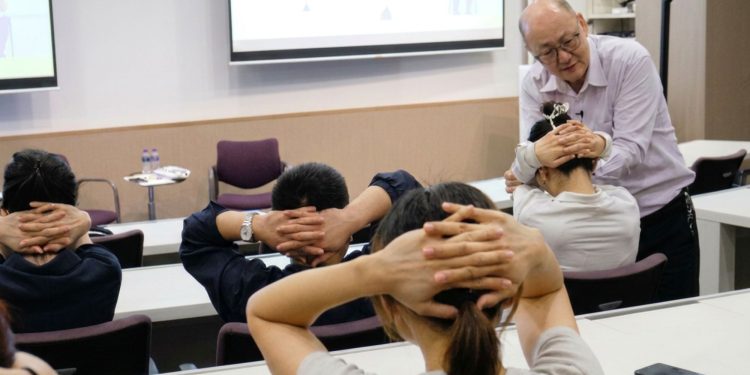
The talk ended with Prof Wang addressing the audience’s questions, including the Cultural Revolution’s long-term impact on China’s education sector.