
What if a country’s progress could be measured by more than just economic growth?
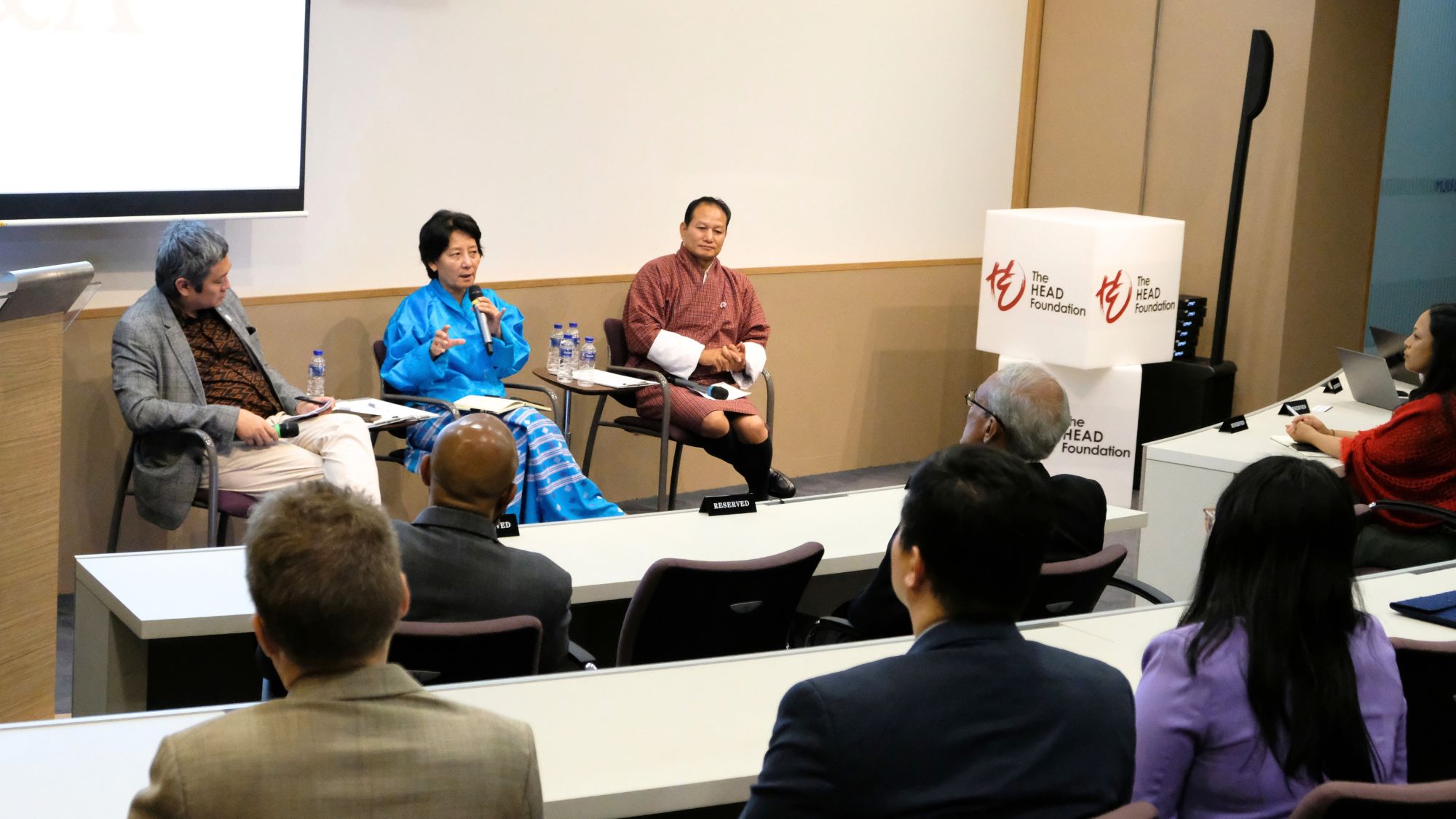
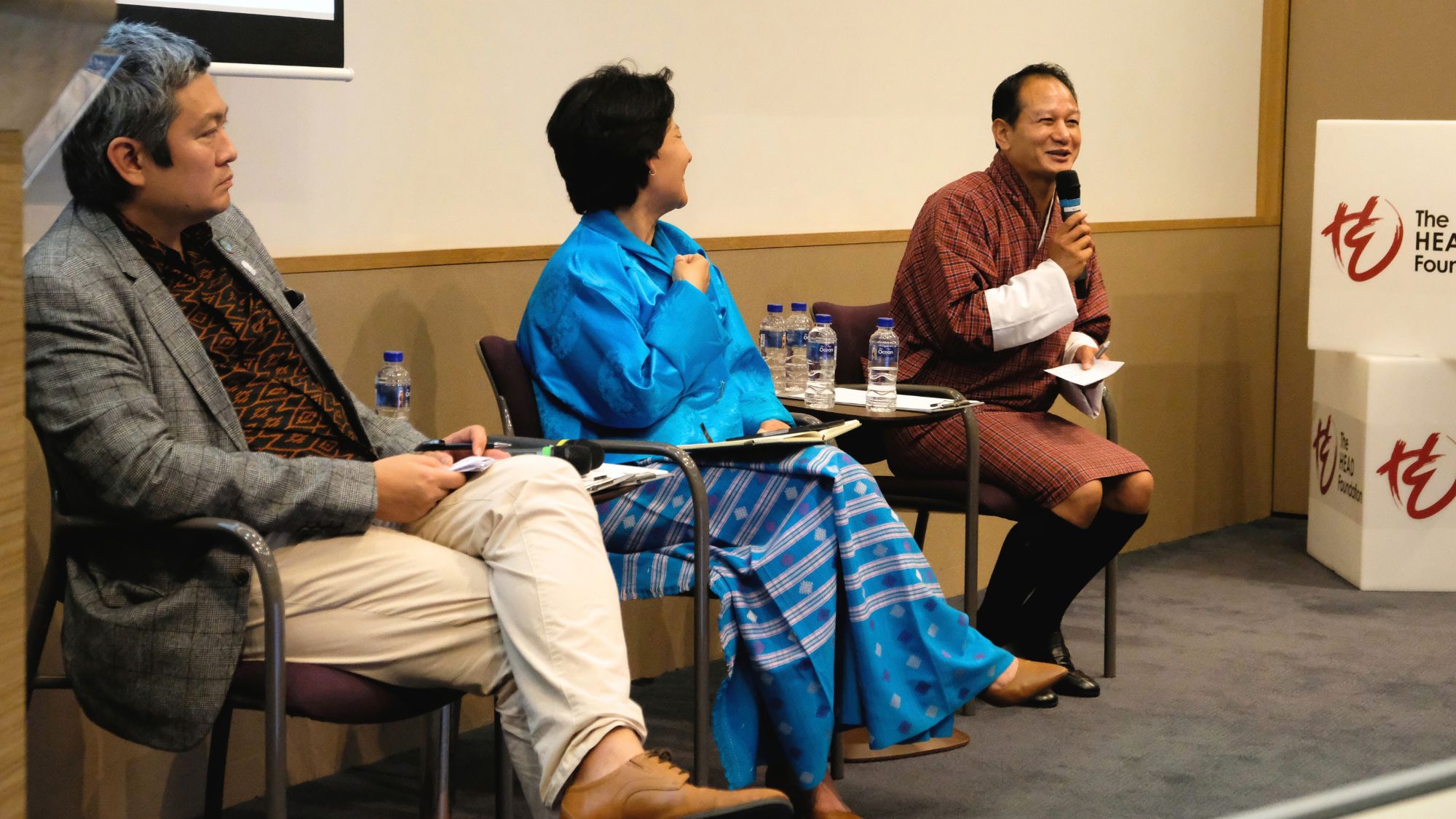
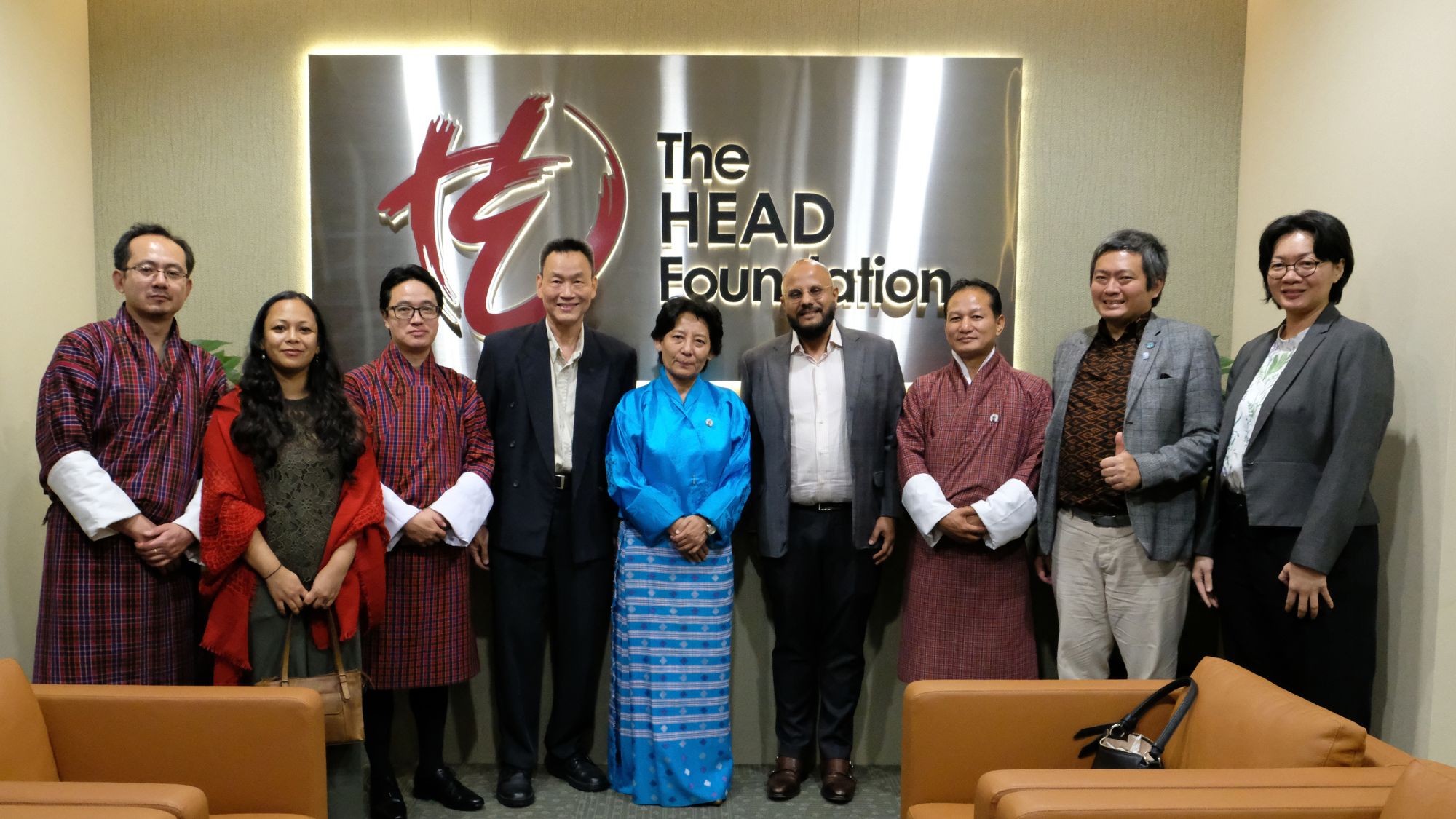
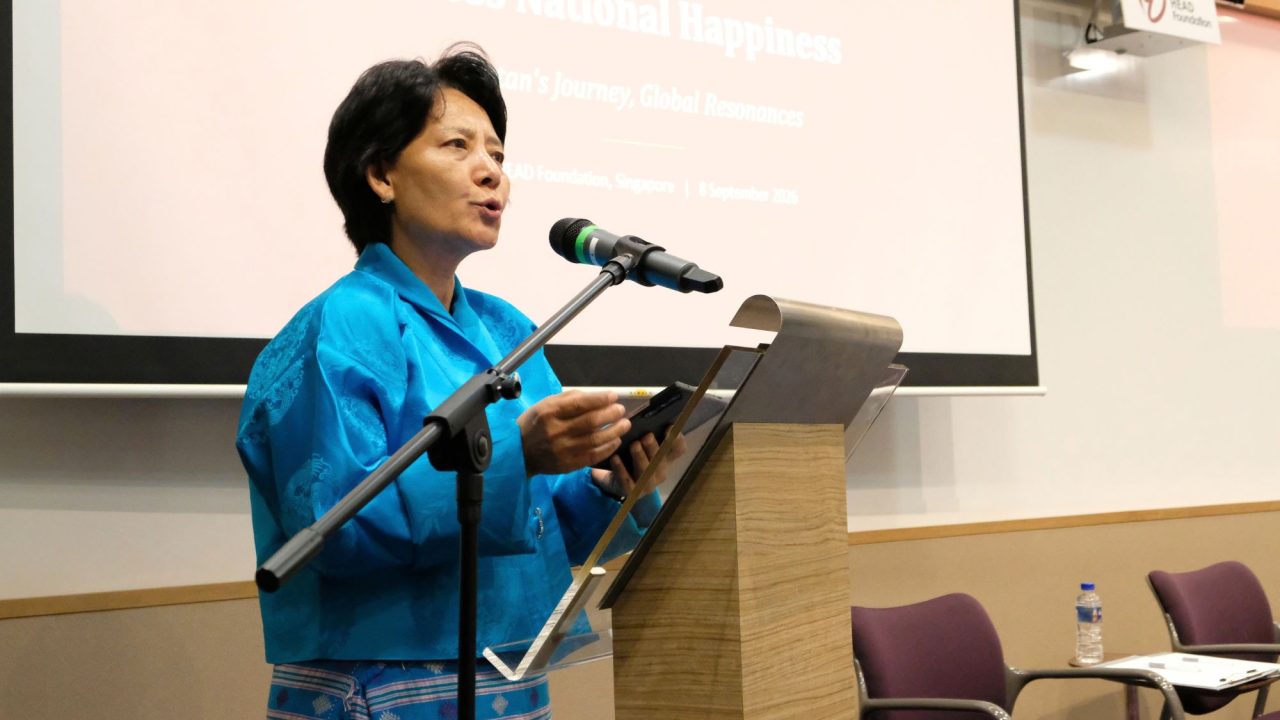
On 8 September 2026, The HEAD Foundation hosted a lecture and dialogue by Dasho Kesang Deki of the Cabinet Secretary, Prime Minister’s Office, Kingdom of Bhutan. She spoke on “Planning the Pursuit of Gross National Happiness: Bhutan’s Journey, Global Resonances”. The event was moderated by Mr Luke Tay, the Founder of Cornucopia FutureScapes, and featured Dasho Dr Tshering Cigay Dorji, a Commissioner of the Royal Civil Service Commission (RCSC) of Bhutan and a prominent technology expert, accompanied by Ms Sabarnee Tuladhar, a Statistical Analyst of International Centre for Integrated Mountain Development (ICIMOD).
Dasho Kesang Deki shared how Gross National Happiness (GNH), as a development philosophy, guides Bhutan’s growth to enable people to flourish together. Bhutan’s Fourth King, Jigme Singye Wangchuck, introduced GNH, arguing that economic growth alone is not a sufficient measure of national progress.
She explored the three avenues that translate GNH into practice: a constitutional foundation, policy screening, and Bhutan’s five-year planning process, which incorporates the nine domains and 33 indicators under the GNH index.
To illustrate how GNH is grounded in Bhutan’s constitution, Dasho Kesang Deki cites Early Childhood Care and Development (ECCD) and basic healthcare as important public goods, the safeguarding of Bhutanese cultural identity through the tourism sector, and Bhutan’s strong environmental mandate as one of the world’s carbon-negative countries. In education, the country has also infused GNH values across the curriculum, pedagogy, and the learning environment for students from primary to tertiary levels.
Through a closing discussion segment with Dasho Cigay, moderated by Mr Tay, Dasho Deki highlighted that Bhutan is at an inflection point in its GNH journey. Having made significant progress in education and healthcare, the country now faces new challenges, particularly youth unemployment, job mismatch and the emigration of educated Bhutanese seeking better economic opportunities abroad. The proposed Gelephu Mindfulness City (GMC) is one response, seeking to create new economic opportunities while remaining rooted in Bhutanese values and the principles of “mindful prosperity”.
At the same time, Bhutan is adapting its economy through areas such as hydropower, renewable energy and data centres, while remaining conscious of climate change and the need to protect its GNH philosophy. The conversation also explored the more fundamental question of what constitutes a “good life”, with GNH framed not as guaranteeing happiness, but as the government’s responsibility to create conditions for deeper wellbeing, inner peace and contentment. Finally, the panellists reflected on opportunities for Bhutan and other Asian countries, including Singapore, to learn from one another, not only through government or business partnerships, but through people-to-people exchanges and by reflecting on the kind of societies and values they want to build.
Disclaimer: The views expressed by the speakers in this webinar are their own and do not represent the opinions of The HEAD Foundation.