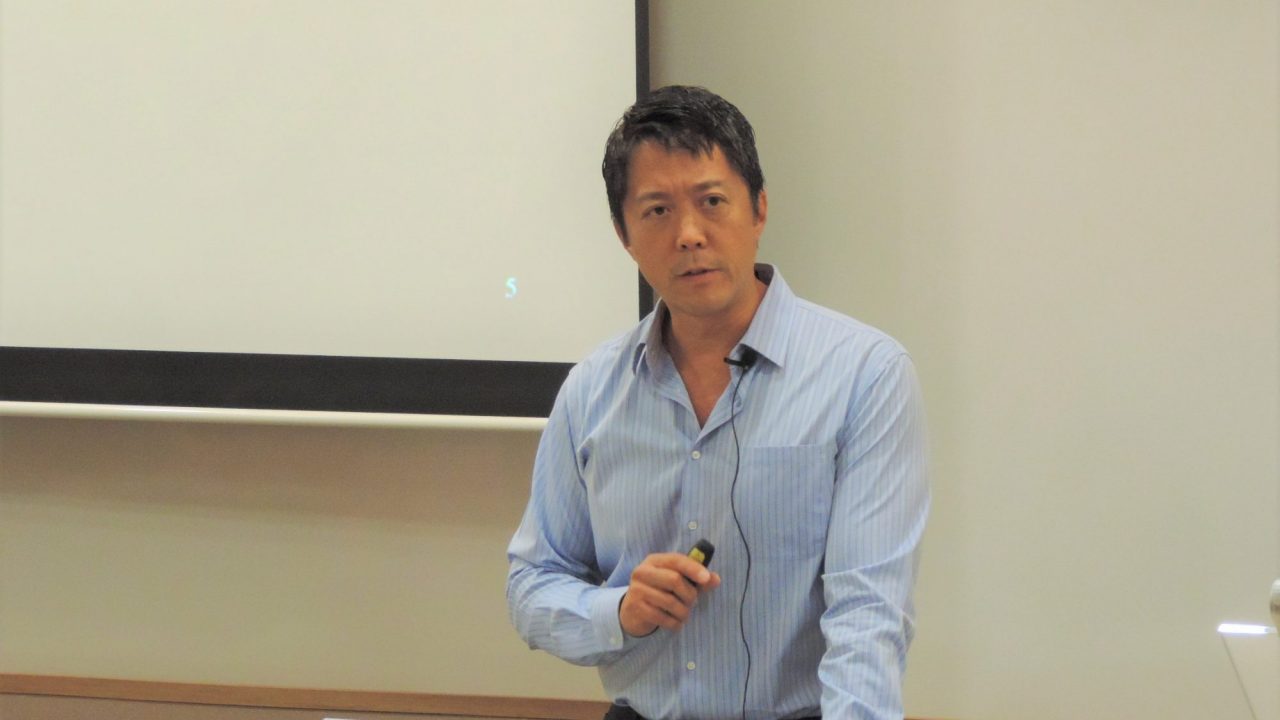
Individuals and organisations are facing increasingly severe and complex problems in the modern world, ranging from diabetes and depression to job burnout and environmental sustainability. Recent developments have implicated one important process that may underlie most, if not all, of these problems: evolutionary mismatch. On 8 November 2018, Dr Norman Li, Associate Professor of Psychology at Singapore Management University discussed the workings of mismatch, examples of its pervasive reach, and implications for individuals and organisations.
Dr Li began by emphasising that while developments in our modern era have improved many aspects of our lives, we also now have more problems to deal with, on an individual and country-wide level. While problems have plagued mankind for as long as we have existed, many of them have been magnified by modern advancements or have only emerged recently (such as climate change). He also pointed to the rise of the self-help industry, telling us how to do things that humans have been doing for millions of years, indicating the escalation of these issues and our inability to cope.
To help explain these predicaments, Dr Li gave a brief introduction to the concept of evolutionary psychology. Our genes influence our psychology directly and indirectly; and these genes come about from mutations of our DNA. The genes associated with thoughts, feelings and behaviour that lead to better survival and reproduction are the ones that are passed down through the generations.
Our psychology is made of numerous information processors which have been naturally selected over millions of years because they took in environmental cues, processed them according to some kind of decision rules, which then produced an adaptive response as an output. Such outputs are feelings, thoughts and behaviours that have somehow helped us survive and reproduce in our evolutionary past. An example is our mechanisms for obtaining energy to survive. One such energy-obtaining mechanism humans have is recognising something sweet as something to be eaten, which got humans to eat ripe fruit.
However, our psychological mechanisms, which evolved over a few million years, have not been able to keep up with the much more rapid change in conditions, in recent times. Because of this, we end up facing a situation Dr Li termed as “evolutionary mismatch”, which arises when our current living conditions are mismatched to our psychological mechanisms because these mechanisms have not been “updated”. This can only happen through further evolution, which cannot happen within one generation.
Furthermore, we now have to deal with evolutionary novel inputs — new things that our mechanisms have never encountered before, which can then result in potentially maladaptive output that may be undesirable. For example, while our energy-obtaining mechanism that recognise sweet food as preferable is still the same, we now have access to manufactured sweet food which may be preferred as input over more natural and healthy options. Hence, we end up taking in much more sugar than what out physiological system can process, resulting in health problems.
Another example is how we now unfairly compare ourselves to “virtual people” (such as celebrities, touched-up models and accomplished individuals), instead of those in our own circles. This produces discomforting output where we might feel unattractive or dissatisfied. He also briefly mentioned how evolutionary mismatch influences chronic stress, which many people experience today, and can possibly explain Singapore’s low fertility rate.
Due to technology, environments have been altered much faster, before psychological and physiological mechanisms can evolve to catch up. Furthermore, modern society’s solution to problems created by technology is usually more technology, which may create new problems. Dr Li therefore asserts that we must understand how these mechanisms work to be able to work with them, rather than against them.
He then concluded the talk by answering questions from the audience, which included how culture plays a role as input and how we can possibly work with our psychological mechanisms to solve problems.