How has Singapore’s education system evolved over the decades, and what can it improve on as it faces the challenges of an uncertain future? On 9 March 2017, Dr Alistair Chew, Education Director at Findings Pte Ltd discussed significant points in the history of Singapore’s education sector, and the underlying principles that guided policies along the way.
Dr Chew first spoke about how education institutions formally began with Sir Stamford Raffles setting up Raffles Institution in 1823. Missionary schools and schools for the Chinese-educated also appeared during these early years of Singapore’s history as part of the British empire. He also traced how these schools developed while the country was under colonial authorities, and how language had an important part in forming these institutions’ identities.
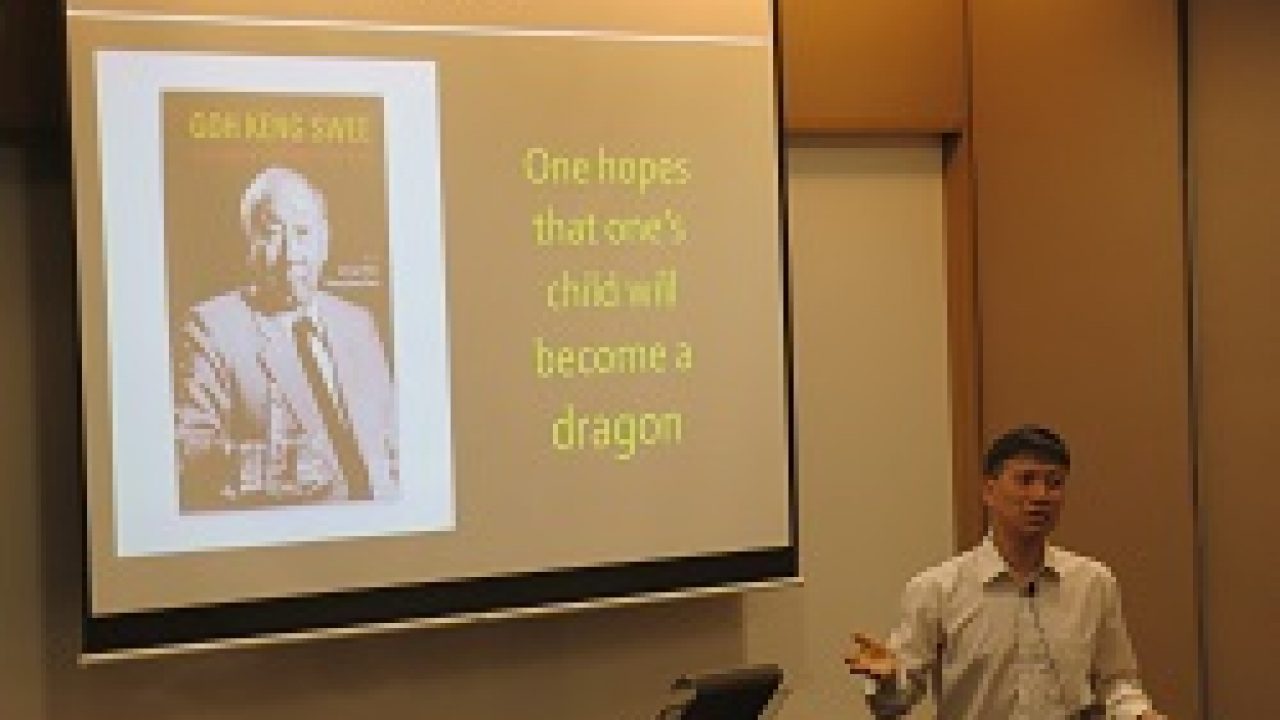
He then discussed the contemporary education system, the blue print of which was drawn up by then-Minister of Education Goh Keng Swee. He identified three problems during his time at the Ministry of Education: a population not fluent in English or Mandarin, poor quality teaching, and elitism.
To address these problems, policy changes such as streaming were then introduced with the goal of developing a reliable workforce and an effective state that can efficiently process information and respond rapidly to changes due to globalisation. These resulted in English becoming the dominant language (and the unintended consequence of Mandarin declining).
Dr Chew then proposed four key lessons to be considered in improving the education system: “Level up the bottom” to harness the potential of the middle class, learn from one’s history and innovate upon it, explore more approaches to teaching, and go beyond one silo of knowledge to have a more holistic worldview.
He then closed the lecture by addressing the audience’s questions which included the recent adjustments to Singapore’s school admission policies and what schools can do more to prepare students for the future.