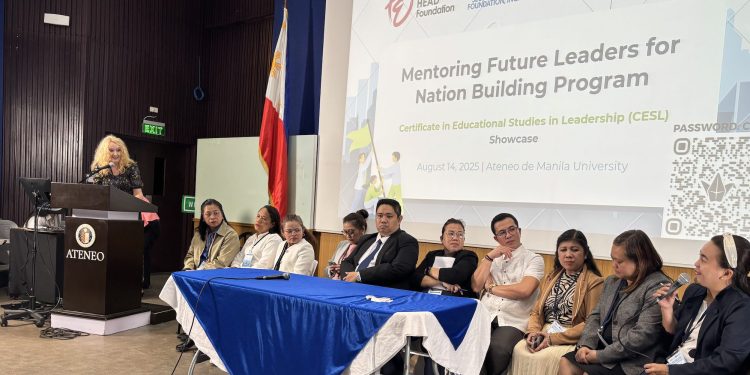

The HEAD Foundation organised a two-day symposium from 16 to 17 November 2015 on the topic of Leadership Challenges in Education in Asia. The symposium involved education and leadership experts from all over the world. Our guests included:
- Satryo Soemantri Brodjonegoro – Former Director General of Higher Education at the Ministry of National Education in Indonesia and Founder of Consulting Firm, SS Knowledge
- T. Basaruddin – Professor of Computer Science at the University of Indonesia and Vice Chairman of the Development Council, Board of Higher Education, Directorate General of Higher Education
- John A. DeFlaminis – Executive Director of the Penn Center for Educational Leadership at the Graduate School of Education, University of Pennsylvania
- Professor Alma Harris – Professor of Educational Leadership at the Institute of Education London and Director of the Institute of Educational Leadership at the University of Malaya
- Sachi Hatakenaka – Specialist in organizational and policy strategies in higher education
- Quentin Thompson – Former advisor to the UK Prime Minister on education policy
Dr. Satryo Soemantri Brodjonegoro and Dr. T. Basaruddin provided an Indonesian perspective on leadership challenges in education. Dr. John DeFlaminis shared his experience with the American school system. Dr. Alma Harris, Dr. Sachi Hatakenaka and Mr. Quentin Thompson gave their insights from a global, cross-national perspective.
On the first day of the symposium, we heard from Dr. Brodjonegoro and Dr. Basaruddin. Both of them elaborated on the multiple challenges that Indonesia’s higher education system faces, including low quality higher education institutions, low enrolment, inadequate budget, excessive bureaucracy, and more. Dr. Brodjonegoro suggested that since Indonesia is a diverse country, a single uniform policy across the country would not work. Thus, Indonesia should have appropriate development plans for different tiers of higher education institutions. Furthermore, a paradigm shift from a rule-based to a knowledge-based approach in leadership is necessary. Dr. Basaruddin proposed that moving forward, there is a great need to improve the quality, relevance, funding, public accountability and competitiveness of higher education in countries like Indonesia.
During the morning session of the second day, Dr. DeFlaminis and Dr. Harris both shared their views on distributed leadership. Dr. DeFlaminis expounded on the Annenberg Distributed Leadership project, which involved interventions in 16 Philadelphia schools to create a stronger leadership fabric in support of school improvement. Results from the study showed overwhelming and statistically significant differences between the distributed leadership teams and the leadership teams in control schools on a number of outcomes. Dr. Harris lamented that cross-country empirical studies of leadership and leadership development, where primary data is actually collected in different countries, remain in relative short supply. She then talked about her latest 7 System Leadership Study, a first step to understanding how context and culture play an essential role in interpreting educational outcomes and effects.
During the afternoon session of the second day, Dr. Hatakenaka and Mr. Thompson shared their thoughts. Dr. Hatakenaka argued that leaders in higher education in Asia need to be visionary and well-engaged with government and industry at the highest level. Academics need to be interdisciplinary and work with a sense of social need. She suggested several interventions to help leadership formation at all levels (not just senior leaders), including programmes to foster links with government and industry. Finally, Mr. Thompson suggested that universities need to help future needs of the economy and its markets, as well as contribute to the development of society. Therefore, university leadership needs to combine and balance these roles. Most importantly, universities need to provide a voice of authority on moral issues.